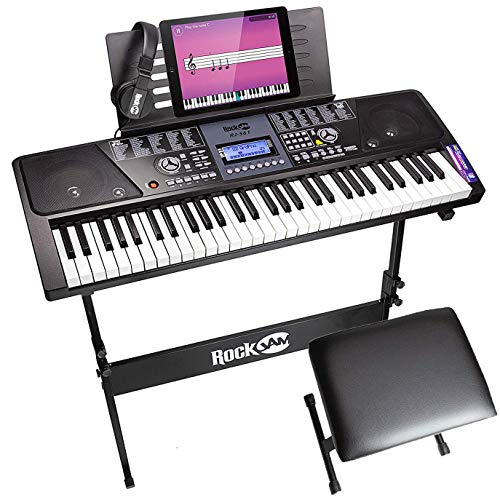
You have been browsing digital pianos for weeks, torn between the two giants: Yamaha and Casio. Both brands offer weighted keys, realistic sound, and sleek designs. But which one truly fits your playing style, your space, and your budget? This guide breaks down the key differences between Yamaha and Casio digital pianos, comparing ten popular models to help you make a confident choice in 2026. Whether you are a beginner looking for your first weighted keyboard or an experienced player upgrading to a console, we have you covered. For a deeper look at portable options, check out our Portable Digital Pianos category.





Buying Guide: What to Look For in a Yamaha or Casio Digital Piano
Touch and Key Action
The feel of the keys is the most important factor for any pianist. Yamaha uses Graded Hammer Standard (GHS) and Graded Hammer Compact (GHC) actions, which replicate the heavier feel of lower keys and lighter touch of higher keys. Casio counters with its Tri-Sensor Scaled Hammer Action II, found in the Privia PX-870, which offers three sensors for faster repetition and simulated ebony and ivory textures. Both brands deliver authentic weighted responses, but Casio’s triple-sensor system can capture rapid passages with more precision.
For a portable option with excellent touch, read our casio privia PX-S1100 review, which highlights a slim design with weighted keys.
Sound Quality and Engine
Yamaha draws from its legendary CFX concert grand piano sound, layering in damper and string resonance for a rich, room-filling tone. Models like the YDP-146B and P225 include advanced resonance modeling. Casio’s AiR Sound Source also delivers deep, expressive piano sounds with key-off simulation and mechanical noises that mimic an acoustic grand. The Casio PX-870 goes further with a 40W, four-speaker system that projects sound more powerfully than many Yamaha models at a similar price point.
If portability is your priority, the yamaha P125 review shows how Yamaha packs grand piano sound into a lightweight keyboard.
Design and Connectivity
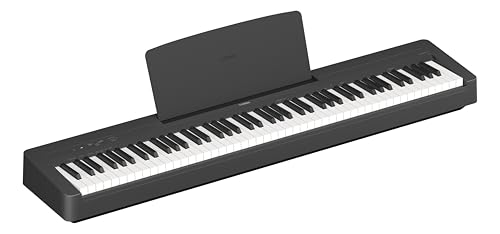
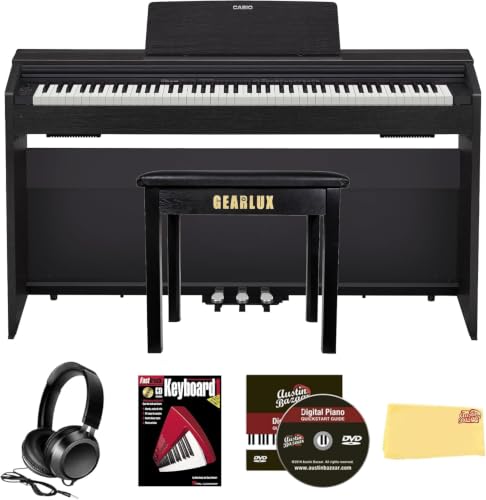
Console models like the Casio PX-870 and Yamaha Arius YDP-105B feature elegant wooden cabinets with sliding key covers and three-pedal units, blending into home decor. Portable models like the Yamaha P145 and P225 offer slim, lightweight builds with Bluetooth audio and MIDI for app integration. For beginners, the Yamaha PSRE283 provides a 61-key portable keyboard with built-in learning tools, while the Casio PX-870 bundle includes a furniture bench and headphones for a complete setup.
Explore more console options in our Console Digital Pianos category.
Value and Features for Learning
Both brands cater to learners. Casio offers Duet Mode, dual headphone jacks, and Concert Play with orchestral backing tracks. Yamaha includes lesson songs, Smart Chord for one-finger chords, and the Smart Pianist app for visual feedback. The Yamaha P45 and P71 are affordable entry points with weighted keys and sustain pedals, while the Casio PX-870 bundle adds instructional materials. Your choice depends on whether you prioritize sound projection (Casio) or app ecosystem (Yamaha).
For a beginner-focused comparison, see our yamaha P45 vs P125 guide.
Final Thoughts
After evaluating ten models, we recommend the Casio Privia PX-870 to 88-Key Weighted Console for players who want a console-style piano with powerful speakers and a realistic key feel, and the Yamaha 88-Key Digital Piano with Weighted Keys for those who need a portable, Bluetooth-enabled instrument that fits a modern lifestyle. Both deliver exceptional value, but your decision should hinge on whether you prioritize a permanent home setup or the flexibility to play anywhere.
Frequently Asked Questions
Which brand has better weighted keys, Yamaha or Casio?
Both brands offer excellent weighted actions. Yamaha’s GHS and GHC actions are reliable and widely praised, while Casio’s Tri-Sensor II Scaled Hammer Action provides faster sensor response and textured key surfaces. For classical or advanced repertoire, Casio’s triple-sensor system may offer a slight edge in precision.
Are Casio digital pianos as durable as Yamaha?
Yes, Casio digital pianos, especially the Privia series, are built with robust materials and reliable electronics. Yamaha has a long reputation for durability, but Casio has matched that standard in recent years. Both brands offer warranties and solid customer support.
Can I use headphones with these digital pianos?
Absolutely. Nearly every model in this comparison includes dual headphone jacks for quiet practice. The Casio PX-870 and Yamaha YDP-105B both support silent playing, making them ideal for apartments or late-night sessions.
What is the best Yamaha digital piano for beginners in 2026?
The Yamaha P71 and P45 are excellent entry-level choices with weighted keys and simple controls. For a more complete experience, the Yamaha P143 bundle includes a stand and bench, making it a great all-in-one starter package. Check our yamaha P45 review for more details.