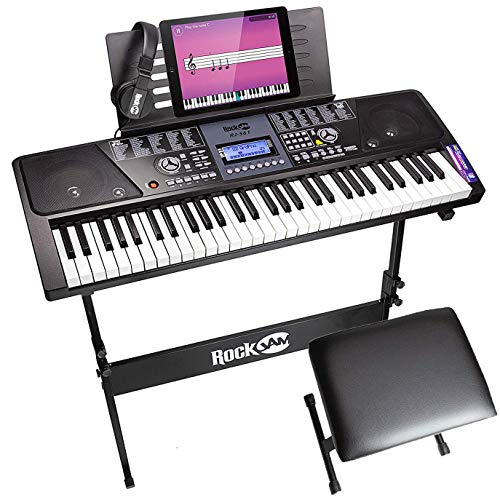
You’ve decided it’s time for a proper digital piano, and you’ve narrowed it down to two of Yamaha’s most popular portables: the P45 and the P125. Both offer 88 weighted keys, but that’s where the similarities start to blur. Maybe you’re a beginner looking for a solid first instrument, or perhaps you’re an intermediate player who needs more expressive control and connectivity. This guide breaks down the key differences between the Yamaha P45 and P125 to help you choose the one that fits your playing style and budget.
We’ll compare their actions, sounds, polyphony, and extra features, and we’ll also look at essential accessories like stands and pedals that complete your setup. By the end, you’ll know exactly which model deserves a spot in your home. If you’re also curious about the newer P225, check out our yamaha P225 review for a fresh alternative.



Buying Guide: What to Look For in a Portable Digital Piano
When you’re comparing the Yamaha P45 and P125, it’s easy to get lost in specs. But a few key criteria will make all the difference in your daily playing experience. Let’s break down what really matters.
Keyboard Action and Feel
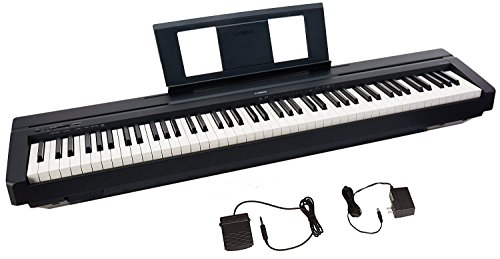
The most critical factor is how the keys respond under your fingers. The Yamaha P45 uses the Graded Hammer Standard (GHS) action, which is heavier in the lower register and lighter in the upper, mimicking an acoustic piano. It’s a reliable, beginner-friendly action that has been a benchmark for years.
The P125 also features GHS, but with a crucial upgrade: synthetic ivory keytops. These absorb moisture and provide a slightly grippier feel, preventing your fingers from slipping during long practice sessions. If you plan to play for hours, that subtle texture can make a big difference.
Sound Engine and Polyphony
Polyphony determines how many notes can sound simultaneously without dropping any. The P45 offers 64-note polyphony, which is fine for most beginner pieces, but it can choke on complex passages with sustained pedal. The P125, on the other hand, doubles that to 192 notes, giving you plenty of headroom for layered compositions and heavy pedal use.
The P125 also uses Yamaha’s PureCF Sound Engine, sampled from a Yamaha CF concert grand. It delivers a richer, more detailed tone than the P45’s Advanced Wave Memory (AWM) sampling. You’ll notice the difference in the sustain and resonance, especially through headphones.
Connectivity and Features
If you want to use your piano with apps or a computer, the P125 is the clear winner. It has a USB-to-Host port that allows MIDI connection to your laptop, tablet, or phone. The P45 lacks this feature entirely, so you’ll need a separate MIDI interface if you want to use music software.
The P125 also adds a few extra voices (24 total vs. 10), a built-in 2-track recorder, and a more powerful speaker system (14W total vs. 12W). These are small but meaningful upgrades for practice and performance. For a deeper dive, read our yamaha P125 review to see how it stacks up in real-world use.
Accessories: Stands and Pedals
Both the P45 and P125 are portable, but you’ll likely want a stable stand and a proper pedal unit for home use. The P45 works with the L85 stand, while the P125 uses the L125B wooden furniture stand. If you need a triple-pedal setup, the LP1B 3-pedal unit is compatible with the P125 when paired with the L125B stand.
For the P45, you can get a bundle that includes a wooden stand and bench, like the YAMAHA P45 88-Key Weighted Digital Piano Home bundle. That’s a convenient way to have everything you need out of the box. If you’re on a tight budget, check out our guide to the best digital pianos under $500 for more options.
Final Thoughts
In the end, the choice between the Yamaha P45 and P125 comes down to your needs and budget. The Yamaha 88-Key Weighted Portable Digital Piano (P45B) is an excellent, no-frills instrument that delivers a solid weighted action and great sound for beginners, all at an approachable price. If you’re ready to invest a bit more for superior sound, better connectivity, and a more refined playing feel, the Yamaha P45 88-Key Weighted Action Digital Piano (renewed) is a smart pick, but for the full P125 experience, consider the P125B model. Whichever you choose, you’ll be getting a reliable instrument that will serve you well for years.
Frequently Asked Questions
Is the Yamaha P125 worth the extra money over the P45?
Yes, for most players, the P125 justifies its higher price with upgraded sound engine, more polyphony, USB connectivity, and a better keyboard feel. If you’re a beginner on a strict budget, the P45 is still a great choice, but the P125 offers room to grow.
Can I use the same stand and pedal for P45 and P125?
No, the P45 and P125 have different dimensions and mounting points. The P45 uses the L85 stand, while the P125 uses the L125B stand. The LP1B 3-pedal unit is only compatible with the P125 (when used with the L125B stand), not with the P45.
Which Yamaha digital piano is better for beginners in 2026?
Both are excellent for beginners, but the P45 is often recommended for its simplicity and lower cost. The P125 adds features that can benefit beginners who want to explore more sounds and connect to apps for learning. Check out our yamaha P45 review for a closer look.
Does the P125 have a better key action than the P45?
Both use GHS key action, but the P125’s synthetic ivory keytops provide a more comfortable, grippier feel. The action itself is essentially the same, so the difference is in touch, not mechanics.