

You have moved past the beginner stage, and your current keyboard feels limiting. You need a piano that responds to your growing technique, offers a richer sound palette, and feels closer to an acoustic instrument. This guide reviews the top piano keyboards for intermediate players in 2026, focusing on models that offer weighted keys, quality sounds, and the features you need to advance.
We have evaluated a range of keyboards from leading brands like Yamaha, Alesis, and RockJam, considering key action, sound engine, portability, and connectivity. Whether you are practicing at home or performing, we have a recommendation for you.

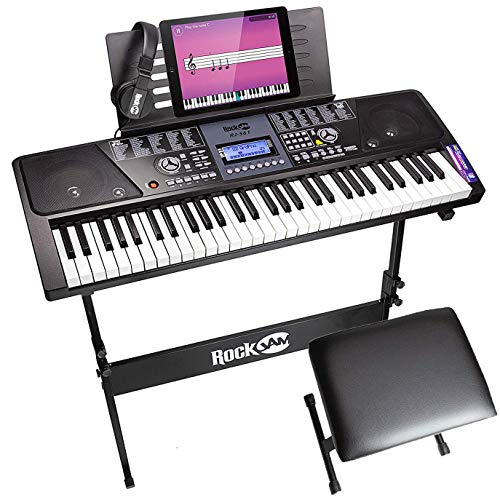


Buying Guide: What to Look For in an Intermediate Keyboard
As an intermediate player, you need an instrument that can keep up with your skills. Here are the key factors to consider when choosing your next keyboard.
Weighted Keys and Touch Response
The feel of the keys is crucial for expressive playing. Weighted keys simulate the resistance of an acoustic piano, helping you build finger strength and control. Semi-weighted keys offer a lighter touch, which can be suitable for some styles, but full weighted or hammer action is often preferred by intermediate players.
Touch response allows the volume to vary with how hard you press the keys. This is essential for dynamics. For a deeper dive into this topic, check out our guide on what a weighted keyboard is.
Sound Quality and Polyphony
Look for a keyboard with high-quality sound samples, especially if you want a realistic grand piano sound. Polyphony, the number of notes that can sound simultaneously, is also important. A minimum of 64-note polyphony is recommended for intermediate players to avoid dropped notes when using the sustain pedal.
Many digital pianos offer a variety of instrument voices, from electric pianos to strings and organs. Having a broad sound library can inspire creativity and allow you to explore different genres.
Number of Keys
For intermediate players, a full 88-key keyboard is generally the best choice, as it covers the entire piano range. This is especially important if you are playing classical repertoire or want to transition to an acoustic piano. However, if space is a concern, a 76-key or even a high-quality 61-key keyboard can still be a viable option for many styles. Learn more about how many keys a piano has to make an informed decision.
Connectivity and Extra Features
Modern keyboards offer a range of connectivity options that enhance your playing and learning experience. USB-MIDI allows you to connect to a computer or tablet for recording and using educational software. Bluetooth connectivity can stream audio from your devices, and headphone jacks enable silent practice.
Additional features like built-in rhythms, demo songs, and recording functions can be valuable for practice and composition. When comparing, consider which features align with your goals. If you are weighing the pros and cons of digital pianos versus keyboards, our comparison guide can help.
Final Thoughts
Choosing the right keyboard is a personal journey, but our top picks cater to different needs. For those seeking a premium, acoustic-like experience with a traditional upright design, the Yamaha Arius Series 88-Key Weighted Action Upright is an outstanding choice. If you prefer a portable yet powerful instrument with a wide range of sounds, the Yamaha P225 88-Key Digital Piano with Weighted offers excellent value and performance. Both will serve you well as you continue your musical journey.
Frequently Asked Questions
What is the difference between semi-weighted and fully weighted keys?
Semi-weighted keys offer a lighter resistance, which can be easier on the fingers for fast playing or synth-style performance. Fully weighted keys simulate the heavier feel of an acoustic piano, which is better for building finger strength and playing classical piano music. For intermediate players, fully weighted keys are often recommended to refine technique.
Do I need 88 keys as an intermediate player?
While not strictly required, 88 keys are ideal for intermediate players because they cover the entire piano range, allowing you to play a wider variety of repertoire without limitations. If you plan to play classical piano or transition to an acoustic piano, an 88-key keyboard is the best investment. For more insights, read our article on whether a 61-key keyboard is enough.
Can I connect an intermediate keyboard to a computer?
Yes, most intermediate keyboards feature USB-MIDI connectivity, allowing you to connect to a computer or tablet for recording, music production, and educational software. This is a great way to expand your creative possibilities and track your progress. Some models also offer Bluetooth for wireless connections.
What is polyphony and why does it matter?
Polyphony refers to the maximum number of notes a keyboard can produce at once. Higher polyphony prevents notes from cutting off when you use the sustain pedal or play complex chords. For intermediate players, a keyboard with at least 64-note polyphony is recommended to ensure a seamless playing experience.


