
You are a keyboardist who needs an amplifier that faithfully reproduces every nuance of your instrument, from the subtle decay of a piano note to the punch of a synth bass. Maybe you are a gigging musician who plays in small clubs, or a home studio enthusiast who wants to monitor your keyboard without coloration. The wrong amp can muddy your sound, limit your headroom, or fail to keep up with a band. This guide focuses on the Roland KC-400 and its alternatives, helping you choose the keyboard amplifier that delivers clarity, power, and versatility for your specific setup in 2026. We have evaluated the top models from Roland and Peavey to provide a clear, practical comparison. For a broader look at the category, you can also explore our guide to the best keyboard amplifiers for clear sound.


Buying Guide
Power and Headroom
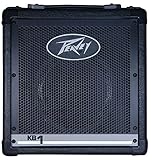
Keyboard amplifiers need clean power to handle the wide dynamic range of digital pianos and synthesizers. A 20-watt amp like the Peavey KB 1 is fine for quiet home practice, but it will distort when pushed with a band. The Roland KC-400 delivers 150 watts in stereo, offering enough headroom for small to medium venues. If you play larger stages, the Roland KC-990 provides 320 watts (160W per channel) for massive, clean sound. Always match the amp’s power to your performance environment.
For a deeper understanding of how power relates to your instrument, read our guide to 76-key weighted hammer keyboards to see how touch sensitivity interacts with amplification. Also, consider your keyboard stand for sitting to ensure a stable setup for your amp and keyboard.
Channel Count and Mixing Flexibility
If you use multiple sound sources, such as a keyboard, a synth, and a vocal mic, you need multiple input channels. The Roland KC-400 and KC-200 both offer four channels, allowing you to mix several instruments or microphones without an external mixer. The KC-400 adds stereo output and a dedicated stereo link feature for pairing with a second unit. The Peavey KB 1 has only one input, limiting it to a single instrument. Choose based on how many sources you need to plug in.
Portability and Build Quality
Gigging musicians need an amp that is easy to transport without sacrificing durability. The Peavey KB 1 is compact and lightweight at around 20 pounds, ideal for quick rehearsals. The Roland KC-400 is heavier but still manageable with a built-in handle and a rugged plywood cabinet. The KC-990 is a substantial unit that may require two people to move. Evaluate your travel frequency and physical strength when choosing.
Sound Quality and Features
Roland amps are known for their flat, transparent response, which accurately reproduces keyboard tones without added coloration. The KC-400 includes a three-band EQ, reverb, and a stereo link function. The KC-200 offers similar sound but with fewer watts. Peavey’s KB 1 provides a clean, simple tone suitable for practice, but lacks the low-end extension and clarity of larger Roland models. For advanced connectivity, the KC-400 also includes a multi-effects processor with USB-C and MIDI, which can be useful for integrating with a MIDI controller for Bitwig or other DAWs.
Final Thoughts
After evaluating the top keyboard amplifiers on the market, we recommend the Roland KC-400 4 Channel Stereo Mixing Keyboard for most players who need a versatile, powerful amp for gigs and rehearsals, and the Peavey KB 1 20-Watt 1×8 Keyboard Amp for those on a tight budget or who only need a simple practice amp. Both deliver reliable performance, but the Roland offers far more flexibility and headroom for serious musicians. For more on piano accessories, visit our Piano Accessories category.
Frequently Asked Questions
Can I use a keyboard amplifier for vocals?
Yes, many keyboard amplifiers like the Roland KC-400 have dedicated microphone inputs with separate volume controls. They provide a clean, flat response that works well for spoken word or singing in small settings. However, for professional vocal performance, a dedicated PA system is usually better.
What is the difference between the Roland KC-200 and KC-400?
The KC-400 offers higher power (150 watts vs. 100 watts), stereo output, a three-band EQ, and built-in reverb. It also includes a multi-effects processor with USB-C and MIDI connectivity. The KC-200 is a simpler, more affordable option with four mono channels. For 2026, the KC-400 is the better choice for gigging musicians.
How many watts do I need for a keyboard amplifier?
For home practice, 20 to 40 watts is sufficient. For small gigs with a band, look for 100 to 200 watts. For larger venues or outdoor performances, 300 watts or more is recommended. The Roland KC-990 with 320 watts is ideal for loud stages. Always consider your typical playing environment.
Is the Peavey KB 1 good for live performance?
The Peavey KB 1 is designed for practice and small spaces. Its 20-watt output is not powerful enough to compete with a drummer or a loud band. For live performance, consider the Roland KC-400 or a higher-wattage model. It is a great choice for quiet home use or as a secondary monitor.