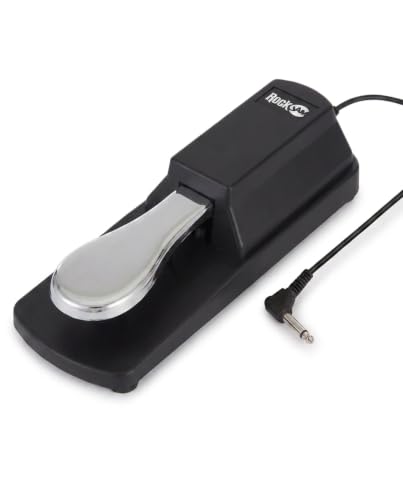
You are in the middle of a beautiful piano piece, your fingers dancing across the keys, when you press the sustain pedal and it slides away from your foot. Or worse, it produces a loud, distracting click that ruins the mood. A good sustain pedal is an essential part of your setup, yet it is often overlooked until something goes wrong. Whether you are a beginner taking your first lessons or an experienced performer, the right pedal provides smooth, quiet, and reliable control over your sound. In this guide, we have evaluated the best sustain pedals on the market, from budget-friendly options to premium models that mimic the feel of an acoustic grand piano.
We have focused on key features like compatibility, build quality, and pedal action to help you find the perfect match for your instrument. If you are just starting your musical journey, you might also want to check out our guide to the best digital piano for beginners for a complete setup.



How to Choose the Best Sustain Pedal
Polarity Switch: Universal Compatibility
Not all sustain pedals work with every keyboard. Some instruments require a normally open (NO) pedal, while others need a normally closed (NC) one. A polarity switch on the pedal lets you toggle between these two modes, ensuring compatibility with a wide range of brands like Yamaha, Casio, Roland, and Korg. Without this switch, you might find the sustain function reversed, which is frustrating during practice or performance.
Most of the pedals we reviewed, including the RockJam and LEKATO models, include this feature. If you own multiple keyboards or plan to upgrade, a pedal with a polarity switch is a smart investment. For a deeper look at setting up your instrument, see our best keyboard piano for beginners guide.
Pedal Action and Feel
The way a pedal feels under your foot is crucial for expressive playing. Some pedals, like the M-AUDIO SP-2 and the On-Stage KSP100, offer a weighted, piano-style action that resists your foot just like an acoustic grand piano’s damper pedal. This provides a more natural and controlled sustain response. Others are lighter and more compact, which can be fine for beginners or for use with lightweight MIDI controllers.
Consider where and how you play. If you practice on a weighted digital piano at home, a heavier pedal will feel more authentic. If you travel with a synth or a small keyboard, a compact pedal like the VALDI BP-3 might be more practical.
Build Quality and Stability
A sustain pedal takes a lot of abuse. It needs to withstand repeated presses without breaking or becoming noisy. Look for pedals with metal construction or reinforced ABS plastic. An anti-slip base is equally important. Models like the Yamaha FC4A and the Soraco pedal feature rubberized bottoms that grip the floor, preventing the pedal from sliding away during intense play.
A durable cable is another sign of quality. A flimsy cable can fray or break at the connection point. Most pedals come with a cable around 5 to 6 feet long, which is usually enough for comfortable placement under your keyboard. If you need a longer reach, the VALDI BP-3 offers an extended cable for added flexibility. For more on choosing the right gear, read our best weighted keyboard recommendations.
Final Thoughts
After carefully reviewing these sustain pedals, our top recommendation for most players is the M-AUDIO SP-1 Universal Sustain Pedal for its reliable performance, universal compatibility, and affordable price. However, if you prioritize a more authentic, weighted feel that closely mimics an acoustic piano, the On-Stage KSP100 Universal Sustain Keyboard Pedal is an excellent choice that will serve you well for years. Whichever you choose, a quality sustain pedal is a small investment that makes a huge difference in your playing.
Frequently Asked Questions
What is a sustain pedal and how does it work? A sustain pedal, also known as a damper pedal, allows the notes you play to continue sounding even after you lift your fingers from the keys. When you press it, it lifts the dampers off the strings (in an acoustic piano) or sends a continuous signal to a digital piano to hold the sound. This creates a richer, more connected sound.
Will any sustain pedal work with my keyboard? Most sustain pedals use a standard 1/4-inch jack, but compatibility depends on the polarity. If your keyboard uses a normally open (NO) polarity and you buy a normally closed (NC) pedal, the sustain will work in reverse. Look for a pedal with a polarity switch to ensure it works with any keyboard. This is especially important if you have an older or less common model.
How do I know if a sustain pedal is compatible with my digital piano in 2026? Check your piano’s manual for the polarity requirement (NO or NC). If you are unsure, a pedal with a polarity switch is the safest choice. Brands like Yamaha, Casio, and Roland typically use NO polarity, but always verify. You can also search for your specific model online to see which pedals other users recommend.
Should I get a weighted or unweighted sustain pedal? Weighted pedals, like the M-AUDIO SP-2, provide a more realistic, piano-like feel and are preferred by serious pianists and performers. Unweighted pedals are lighter and more portable, making them a good choice for beginners or for use with lightweight keyboards and MIDI controllers. If you plan to play on an acoustic piano eventually, a weighted pedal will help you develop proper technique.