Imagine your child sitting at a keyboard, fingers dancing over the keys, creating their first melody. That moment of discovery is priceless, but finding the right instrument to spark that joy can be a challenge. With so many options, from compact 49-key models to full-featured 61-key sets, you need a guide that cuts through the noise. This review focuses on the best keyboard for kids, evaluating four top contenders from trusted brands like RockJam and JIKADA. Whether you are a parent seeking a first instrument or a teacher equipping a classroom, we have you covered.
Choosing the perfect keyboard involves balancing size, features, and durability. Kids need something that is easy to set up, engaging to play, and built to last. In this article, we break down each product’s strengths, from built-in teaching aids to complete kits that include stands and headphones. For more guidance on beginner instruments, check out our guide to the best keyboard pianos for beginners.



Buying Guide: What to Look for in a Keyboard for Kids
Key Count and Size
The number of keys determines how much room a child has to grow. A 49-key keyboard, like the RockJam RJ549, is compact and ideal for very young beginners or tight spaces. However, most standard songs require at least 61 keys. A 61-key model, such as the RockJam RJ561 or JIKADA 61 Key, offers more range and is better for learning proper fingering technique.
Consider the child’s age and commitment level. For a first instrument, a 49-key model may suffice, but if you anticipate long-term use, investing in a 61-key keyboard provides room to progress. For more on selecting the right size, see our comprehensive beginner keyboard guide.
Teaching Features
Built-in learning tools can accelerate a child’s progress. Look for keyboards with note stickers, which help memorize key positions. The RockJam models include keynote stickers and access to Simply Piano lessons. The JIKADA keyboard goes further with lighted keys and three teaching modes, guiding children step by step. These features reduce frustration and make practice feel like play.
Demo songs and built-in rhythms also keep young learners engaged. A variety of tones and rhythms allows kids to experiment with different sounds, fostering creativity. For advanced learners, a weighted keyboard can simulate an acoustic piano feel; explore our best weighted keyboards for beginners.
Accessories and Kit Completeness
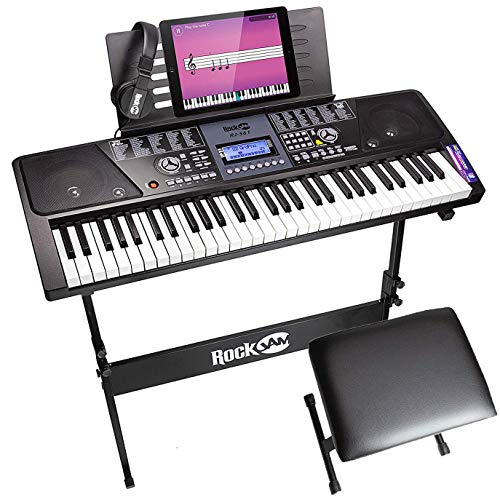
Many keyboards for kids come as complete kits, which simplify setup. The RockJam RJ561 and RJ5061 include a stand, stool, and headphones, so everything is ready out of the box. The JIKADA kit adds a microphone, which can be a fun bonus for singing along. A sturdy stand ensures proper posture, while headphones allow quiet practice, making it easier for siblings to coexist.
Consider what you need versus what is included. A kit may cost more upfront but saves you from buying accessories separately. For a deeper look at weighted options, check our best 88 key weighted keyboards.
Final Thoughts
Selecting the best keyboard for kids comes down to matching features with your child’s age and goals. For a compact, budget-friendly start, the RockJam RJ549 49 Key Keyboard Piano for Beginners is an excellent choice with its note stickers and Simply Piano integration. If you want a more complete setup with room to grow, the RockJam RJ561 61 Key Keyboard Piano Kit offers a stand, stool, and headphones, plus a wider range of tones and rhythms. Whichever you choose, you are giving a child the gift of music, and that is a melody that lasts a lifetime.
Frequently Asked Questions
What size keyboard is best for a 5 year old?
A 49-key keyboard is often ideal for a 5 year old because it is compact and easy to reach. The RockJam RJ549 is a popular choice for this age group. As they grow, they can transition to a 61-key model.
Do kids need a keyboard with weighted keys?
Weighted keys are not necessary for beginners and can be harder for small fingers to press. Most keyboards for kids have semi-weighted or unweighted keys, which are easier to play. Weighted keys are better for older students who plan to transition to an acoustic piano.
Can a keyboard for kids connect to a computer or tablet?
Many modern keyboards, including the RockJam models, offer USB or MIDI connectivity for use with learning apps like Simply Piano. The JIKADA keyboard also has audio input/output jacks. Check the product specifications for compatibility with your device.
Are keyboards with lighted keys better for learning?
Lighted keys can be helpful for visual learners, as they show which keys to press during songs. The JIKADA keyboard features lighted keys with three teaching modes. However, some educators prefer note stickers or sheet music to develop reading skills. For more on teaching methods, see our beginner keyboard guide.