
You’ve decided to learn piano, but the sheer number of keyboards on the market can feel overwhelming. You want something that won’t break the bank, but still feels like a real instrument. You also want tools that actually help you learn, not just a box of keys. That’s where the JIKADA 61 key keyboard steps in: it’s a complete bundle designed to get you playing from day one.
This guide focuses on the JIKADA 61 key review, breaking down its features, teaching modes, and overall value. We’ll also compare it against other popular beginner keyboards from Donner and M-AUDIO, so you can make an informed choice. Whether you’re a complete novice or buying for a child, we’ll help you find the right fit.


Buying Guide: What to Look For in a Beginner Keyboard
1. Key Action and Feel
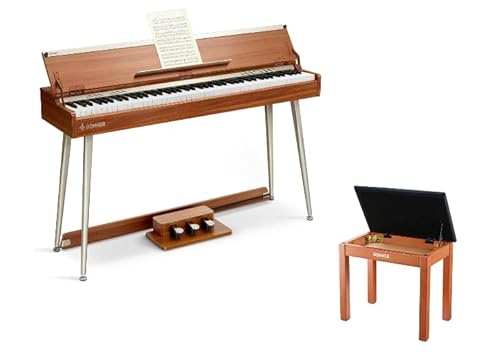
The feel of the keys is crucial. For beginners, you generally have two choices: unweighted or weighted keys. Unweighted keys are lighter and often found on portable keyboards like the JIKADA 61, making them easy to press for small hands or quick learning. Weighted keys mimic an acoustic piano’s heavier, more resistant touch, which is better for developing proper finger strength and technique. If you plan to transition to an acoustic piano later, a weighted model like the Donner Digital Piano with 88 Key Dynamic Graded might be a smarter investment.
Consider your long-term goals. If you just want to play pop songs and have fun, unweighted keys are fine. If you’re serious about classical piano, start with weighted keys. The best rated piano keyboard guide can help you weigh these factors.
2. Teaching Aids and Learning Features
Many beginner keyboards now include built-in lessons, light-up keys, and LCD screens that show you which notes to play. The JIKADA 61 excels here with its three teaching modes and illuminated keys. These features are fantastic for self-learners who want visual guidance. Similarly, the Donner DDP-95 offers three piano teaching modes and an oversized blue light LCD that displays staff notation in real time, which is great for reading music. These tools can significantly accelerate your learning curve.
3. Connectivity and Expandability
Modern keyboards are more than just standalone instruments; they connect to computers, tablets, and apps. Look for USB-MIDI ports, Bluetooth, or audio inputs/outputs. The M-AUDIO Keystation Mini 32 MK3 is a pure MIDI controller, designed to be used with software like MPC Beats and Melodics, offering a different path to learning. The Donner DDP-200 has Bluetooth MIDI, allowing you to connect to music apps wirelessly. For a budget-friendly option, the JIKADA 61 includes audio input, output, and a microphone jack, letting you sing along or plug in a phone.
4. Bundle vs. Bare Keyboard
For a beginner, a bundle can save you a lot of hassle. The JIKADA 61 comes with a stand, stool, headphones, microphone, and note stickers, everything you need to start. The Donner DDP-80 PLUS even includes a matching piano bench. On the other hand, the M-AUDIO Keystation is just the keyboard, so you’ll need to buy a stand, cables, and software separately. If you’re on a tight budget, a bundle like the JIKADA is often the most cost-effective way to get started.
Final Thoughts
After thoroughly evaluating the JIKADA 61 Key Portable Electronic Keyboard Piano,3, it’s clear that this bundle is a fantastic choice for absolute beginners, especially kids, thanks to its light-up keys, teaching modes, and all-in-one package. However, if you’re more serious about developing proper piano technique and want a full 88-key weighted experience, the Donner DDP-95 Digital Piano 88 Key Weighted offers an excellent balance of features and realistic feel for a slightly higher investment. Both are stellar options, but your choice should align with your long-term musical aspirations.
Frequently Asked Questions
Is the JIKADA 61 keyboard good for beginners?
Yes, the JIKADA 61 is specifically designed with beginners in mind. It features light-up keys and three teaching modes that guide you step by step, making it one of the most accessible ways to start learning piano. The included note stickers and bundle items like the stand and stool add to its beginner-friendly appeal.
Does the JIKADA 61 have weighted keys?
No, the JIKADA 61 has unweighted keys, which are lighter and easier to press. This is typical for portable keyboards in its price range and is actually beneficial for young children or those with less finger strength. If you need a weighted feel, consider the Donner DDP-95 or DDP-200.
Can I connect the JIKADA 61 to a computer or phone?
The JIKADA 61 includes audio input and output jacks, allowing you to connect a phone or tablet to play along with tracks. However, it does not have USB-MIDI or Bluetooth connectivity, so it cannot interact with music production software. For that, you’d need a dedicated MIDI controller like the M-AUDIO Keystation Mini 32.
What is the difference between the JIKADA 61 and a full-size digital piano?
The main differences are key count, key action, and size. The JIKADA 61 has 61 unweighted keys, which is about five octaves, while a full-size digital piano has 88 weighted keys (seven octaves). Full-size pianos also offer a more authentic touch and sound, but they are larger and more expensive. For a beginner, a 61-key keyboard is often enough to start, but if you plan to play classical repertoire, an 88-key weighted piano is recommended. Check out our guide on the best piano keyboard for the money to see options at various price points.