

You’re ready to buy a digital piano, but the choice between Donner and Yamaha feels overwhelming. Yamaha is a legendary name with decades of acoustic piano expertise, while Donner has carved out a reputation for affordable, feature-packed instruments. This guide breaks down the key differences to help you choose the right one for your skill level, budget, and space.
We’ve compared five popular models from both brands, focusing on keyboard action, sound quality, connectivity, and overall value. Whether you’re a beginner looking for your first instrument or a seasoned player seeking a portable practice piano, this Donner vs Yamaha digital piano comparison will steer you in the right direction. For more brand battles, check out our roland vs yamaha digital piano analysis.



Buying Guide: What to Look for in a Digital Piano
Keyboard Action and Feel
The keyboard action determines how closely the piano mimics an acoustic instrument. Weighted keys are essential for developing proper finger technique, and both brands offer them, but the feel differs significantly.
Yamaha’s Graded Hammer Compact (GHC) and GrandTouch-S actions provide a heavier touch in the lower register and lighter in the upper, just like a grand piano. The wooden keys on the high-end model add a level of realism that’s hard to match. Donner’s fully weighted hammer actions also simulate this gradation, making them a solid budget-friendly alternative. If you’re a beginner, either will serve you well, but advanced players may prefer Yamaha’s refined action.
Sound Quality and Polyphony
Sound is where Yamaha truly shines. Their digital pianos use samples from flagship concert grands like the CFX and Bösendorfer, with advanced modeling that recreates string resonance and key-off nuances. The result is a rich, expressive tone that responds to your touch.
Donner offers a wide range of tones, but the sound quality is more synthetic compared to Yamaha’s. That said, models like the DDP-300 feature a four-speaker system with dynamic acoustic processing, delivering impressive clarity for the price. Polyphony, the number of notes that can sound simultaneously, is also crucial. Yamaha models typically offer 192 to 256 notes, while Donner ranges from 128 to 256, so both handle complex pieces well.
Connectivity and Features
Modern digital pianos need to connect to apps and devices for learning and recording. Yamaha’s Smart Pianist app is a standout, offering guided tutorials and sheet music display. Bluetooth audio and MIDI are standard on most Yamaha models, making wireless practice effortless.
Donner also integrates Bluetooth MIDI on several models, plus a 4.3-inch LCD screen that displays notation and key positions, which is perfect for beginners. The DDP-95 includes 610 tones and 600 rhythms, giving you a huge palette for experimentation. If you want a piano that doubles as a music workstation, Donner’s features are hard to beat at this price point. For more budget-friendly options, see our best budget full-size MIDI keyboard guide.
Portability and Design
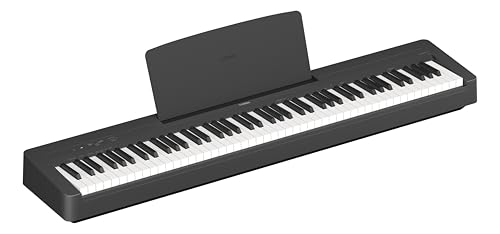
If you plan to move your piano between home and gigs, weight and size matter. Yamaha’s P-145 and P-225 are ultra-portable, weighing under 30 pounds, and can fit in a car trunk. Donner’s DDP-300 is heavier but still manageable, while the DDP-95 is a console-style piano that’s meant to stay put.
Consider your space as well. A slim, lightweight model like the Yamaha P-145 is ideal for small apartments, while a full-size cabinet piano like the Donner DDP-95 makes a statement in a dedicated music room. Pair your choice with a sturdy stand from our keyboard stand best buy list to ensure stability.
Final Thoughts
In the Donner vs Yamaha digital piano showdown, your decision comes down to budget and priorities. If you’re a serious player who values authentic sound and touch, the Yamaha 88-Weighted Wooden Key Digital Piano is the gold standard, offering concert-level expressiveness that will inspire you for years. If you’re a beginner or hobbyist looking for maximum features at an affordable price, the Donner DDP-95 Digital Piano 88 Key Weighted is a fantastic choice with its teaching modes and extensive sound library. Whichever you pick, you’ll be getting a quality instrument that supports your musical journey.
Frequently Asked Questions
Are Donner digital pianos good quality?
Yes, Donner digital pianos offer excellent value for the price. They feature fully weighted keys and a wide range of sounds, making them a great option for beginners and intermediate players. While they don’t match Yamaha’s acoustic realism, they are reliable and feature-rich for the cost.
Is Yamaha worth the extra money?
Yamaha digital pianos are known for their superior sound quality and keyboard action, thanks to decades of acoustic piano craftsmanship. If you’re a serious player or plan to perform, the higher investment is justified. For casual practice, a Donner may suffice.
Which Yamaha model is best for beginners in 2026?
The Yamaha 88-Key Digital Piano with Weighted Keys is an excellent entry point, offering authentic touch and Bluetooth connectivity at a moderate price. It’s compact and easy to use, making it ideal for home practice. For a step up, the P-225 adds more voices and a slightly better action.
Can Donner pianos connect to apps?
Yes, many Donner models feature Bluetooth MIDI, allowing you to connect to apps like the Donner Music App for lessons and recording. This makes them a great choice for tech-savvy learners who want interactive feedback. Check out our alesis vs donner comparison for more alternatives.


