

You’ve decided to learn piano, or maybe you’re upgrading from a toy keyboard. The market is flooded with options, and finding a reliable, enjoyable instrument can feel overwhelming. This guide cuts through the noise, focusing on the best rated piano keyboards for beginners and hobbyists in 2026. We’ve analyzed top brands like RockJam, JIKADA, UISCOM, and more to bring you a curated list of instruments that offer great sound, realistic feel, and the features you need to grow.
Whether you need a full 88-key digital piano for a home studio or a portable 61-key keyboard for casual practice, our picks cover a range of needs. We’ll break down what makes each model stand out, helping you make an informed decision. If you’re also on a tight budget, check out our guide to the best budget piano keyboard with headphones for more wallet-friendly options.





Buying Guide: What to Look for in a Piano Keyboard
Before you hit that buy button, consider a few key factors that separate a great practice instrument from a frustrating one. Here’s what we evaluated when choosing our top-rated models.
Number of Keys: 61 vs. 88
This is the first major decision. A 61-key keyboard is lighter, more portable, and often cheaper. It’s perfect for beginners who want to learn basics, play pop songs, and experiment with sounds. However, if you plan to play classical piano or want the full range of a real piano, an 88-key model is essential. Many digital pianos with semi-weighted keys offer a more authentic feel, as seen in the best cheap keyboard piano options we’ve reviewed.
Key Action: Semi-Weighted vs. Weighted
The feel of the keys is crucial for developing finger strength and technique. Semi-weighted keys offer a middle ground: they have some resistance but are lighter than fully weighted keys, making them easier for beginners. Fully weighted keys simulate an acoustic piano’s hammer action, providing the most realistic touch. For a deeper dive into weighted options, see our best affordable weighted key pianos article.
Sound Engine and Polyphony
Look for a keyboard with a wide variety of tones, rhythms, and demo songs. The more sounds, the more fun you’ll have exploring different genres. Polyphony, the number of notes that can sound simultaneously, is also important. A minimum of 32-note polyphony is recommended, but 64 or more is better for complex pieces and using layers.
Connectivity and Extras
Modern keyboards offer USB-MIDI connectivity for use with learning apps like Simply Piano or GarageBand. Bluetooth audio is a bonus, letting you play along with songs from your phone. The included accessories also matter. Many kits come with a stand, stool, headphones, and a sustain pedal, which saves you money and hassle. For seniors, ergonomics and ease of use are key, as highlighted in our best piano keyboard for seniors guide.
Final Thoughts
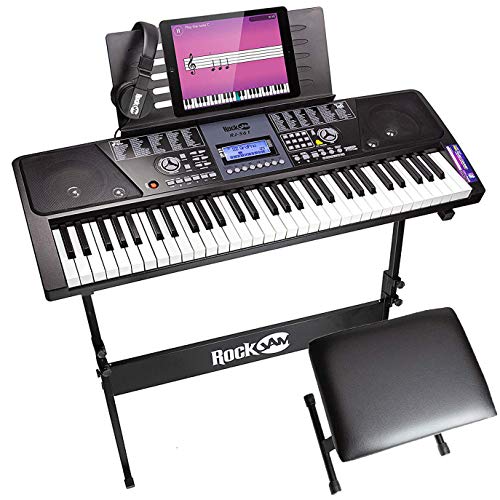
Choosing the best rated piano keyboard ultimately comes down to your personal goals and space. For a complete, immersive practice experience that mimics an acoustic piano, the 88 Key Piano Keyboard, Electric Digital Piano from Zilvok is an outstanding all-in-one package with weighted keys and a full set of accessories. If you prefer a more portable and budget-friendly option that still offers great learning tools, the RockJam RJ561 61 Key Keyboard Piano Kit is a reliable favorite that includes everything you need to start playing right away. Both are excellent choices that will serve you well for years.
Frequently Asked Questions
What is the best rated piano keyboard for a complete beginner?
For a complete beginner, we recommend the 88 Key Piano Keyboard, Electric Digital Piano by Zilvok. It offers semi-weighted keys, a wide range of sounds, and comes with a stand, headphones, and sustain pedal, making it a complete starter kit. Its USB-MIDI compatibility also allows you to use learning apps.
Are 61 keys enough to learn piano?
Yes, 61 keys are enough to learn the basics, play most pop songs, and practice scales. However, as you advance, you’ll miss the lower and higher ranges found on a full 88-key piano. If you have the space and budget, starting with 88 keys is a better long-term investment.
What does semi-weighted keys mean?
Semi-weighted keys offer a middle ground between unweighted synth-action keys and fully weighted piano keys. They have a slight resistance that helps build finger strength but are lighter and quicker to press, making them easier for beginners to play for longer periods without fatigue.
Can I use a piano keyboard with my iPad or computer?
Most modern keyboards include USB-MIDI connectivity, allowing you to connect to your computer, iPad, or phone. This enables you to use educational software like Simply Piano, GarageBand, or other DAWs. Many models also support Bluetooth audio for wireless play-along. For more on integrating keyboards with software, check out our guide on keyboard pianos for professional use.


