
You have moved past the beginner phase. Your fingers know the scales. You can read music without hesitation. Now you need a digital piano that responds to your nuance, offers richer tones, and supports your musical growth without holding you back. The right instrument at this stage makes the difference between hitting a plateau and pushing into expressive, confident playing.
This guide reviews seven top digital pianos built for intermediate players. We have evaluated weighted actions, sound engines, connectivity, and portability to help you find your perfect match. Whether you prefer the intelligent features of The ONE, the stage-ready power of a Nord, or the acoustic realism of a Roland or Yamaha, you will find a model that fits your style. For more context on how these compare to entry-level options, check out our Roland FP-10 review.



Buying Guide
Weighted Key Action and Touch Response
For an intermediate player, the feel of the keys is everything. You need a weighted hammer action that mimics an acoustic piano, with heavier bass keys and lighter treble keys. Look for graded hammer action and triple-sensor detection, which captures rapid repetitions and subtle dynamics accurately.
Models like the Roland FP-30X and Yamaha Arius YDP105R excel here, offering progressive hammer action with escapement. This tactile feedback lets you control volume and articulation precisely, essential for classical pieces or jazz improvisation. For a deeper dive into Yamaha’s approach, see our yamaha arius piano review.
Sound Engine and Polyphony
The sound engine determines how realistic and expressive your piano sounds. SuperNATURAL and Pure CF sound engines from Roland and Yamaha deliver rich, layered tones with natural decay. Polyphony matters too: 64-note polyphony is adequate for most intermediate pieces, but 128 or more gives you headroom for complex layered performances.
The Roland FP-60X and Nord Stage 4 offer advanced sound modeling and extensive voice libraries. These pianos let you shape your tone with onboard effects and customization, making them ideal for players who want to explore different genres.
Connectivity and Smart Features
Intermediate players often integrate digital pianos with computers, tablets, or recording gear. Bluetooth MIDI and audio, USB ports, and headphone jacks are essential. Smart features like built-in lessons, lighted keys, or app control can accelerate your learning and creativity.
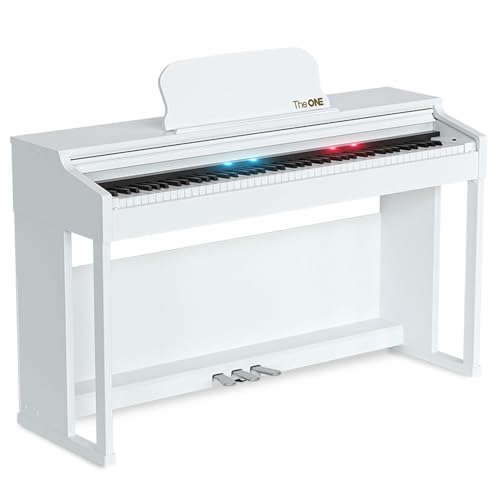
The ONE Digital Piano with lighted keys and online lessons is a standout for tech-savvy musicians. Roland’s FP-40 introduces Wi-Fi for seamless app integration, while the Nord Stage 4 offers professional-grade audio routing. For a broader look at portable options, visit our Portable Digital Pianos category.
Portability and Design
If you plan to move your piano for lessons, gigs, or practice sessions, weight and size matter. Slim, lightweight models like the Roland FP-10 and FP-30X are easy to transport without sacrificing key feel. Console-style pianos like the Yamaha Arius offer a furniture-grade look but are heavier.
Consider your space and lifestyle. A portable slab design with an optional stand gives you flexibility, while an upright cabinet provides a permanent, elegant home instrument. For more on Yamaha’s lineup, see our guide to top Yamaha digital pianos.
Final Thoughts
Choosing the right digital piano as an intermediate player comes down to balancing touch, tone, and features that match your musical ambitions. If you want a versatile, portable instrument with exceptional sound and smart connectivity, the Roland FP-60X | Pro Performance 88-Note is a superb all-rounder that will serve you for years. For those who value an authentic acoustic feel with a traditional cabinet and a rich, dynamic sound, the Yamaha Arius Series 88-Key Weighted Action Upright brings concert-like presence to your home. Both models offer the quality and responsiveness that will inspire your practice and performance.
Frequently Asked Questions
What features should an intermediate digital piano have?
An intermediate digital piano should include fully weighted 88 keys with graded hammer action, a high-quality sound engine with at least 64-note polyphony, and connectivity options like Bluetooth or USB. These features allow you to practice expressively, record, and use learning apps as you advance.
Is a weighted keyboard necessary for intermediate players?
Yes, a weighted keyboard is essential for intermediate players. It builds finger strength and technique, and it accurately replicates the touch of an acoustic piano. Without it, you may develop bad habits that hinder your progress on real pianos.
Can I use an intermediate digital piano for live performances?
Absolutely. Many intermediate digital pianos, like the Roland FP-60X and Nord Stage 4, are designed for stage use. They offer powerful onboard speakers, multiple outputs, and a wide range of sounds suitable for gigs, rehearsals, and recording sessions.
How much should I spend on a digital piano for intermediate level in 2026?
In 2026, a quality intermediate digital piano typically ranges from the mid-hundreds to a few thousand dollars. Focus on key features like weighted action and sound quality rather than a specific budget. Investing in a reliable brand ensures long-term satisfaction and resale value.