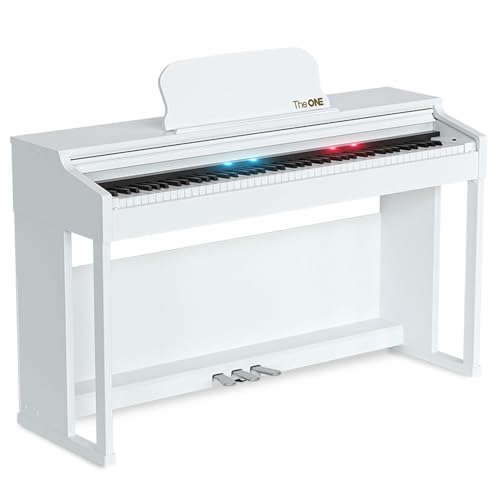

Choosing the best professional 88 key keyboard can feel overwhelming when you are serious about your craft. You need an instrument that responds to every nuance of your touch, delivers rich authentic sound, and fits your workflow whether you are composing in a studio or performing on stage. This guide reviews ten top-tier weighted keyboards from trusted brands like Yamaha, Alesis, Donner, and M-Audio, covering everything from weighted action to connectivity. For a broader look at quality options, check out our top weighted keyboards under $500.


Buying Guide
Weighted Action and Touch Response
The feel of the keys is paramount for any serious player. Fully weighted keys simulate the resistance of an acoustic piano, building finger strength and allowing dynamic expression. Semi-weighted keys offer a lighter touch that still provides velocity sensitivity, which some players prefer for fast synth or organ passages. For a deeper understanding, read our guide on what is a weighted keyboard.
Models like the YAMAHA P71 feature Graded Hammer Standard (GHS) action for an authentic acoustic feel. The Donner DEP-20 offers adjustable touch response, letting you customize the key weight to your preference. Consider your playing style and how much resistance you want under your fingers.
Sound Engine and Polyphony
A professional keyboard needs a sound engine that can deliver rich, layered tones. Look for instruments with high-quality sampled sounds (like the Yamaha CFX grand piano) or advanced synthesis. Polyphony, or the number of notes that can sound simultaneously, is critical for complex pieces with sustain pedal use. Aim for at least 64-note polyphony, with 128 being ideal for demanding compositions.
The Alesis Recital Play offers 480 sounds and 160 rhythms, while the M-AUDIO Keystation 88 MK3 is a pure MIDI controller that relies on your software for sound, giving you unlimited tonal possibilities. Evaluate whether you need built-in sounds or prefer to use virtual instruments on your computer.
Connectivity and Integration
Modern professional keyboards must integrate seamlessly with your studio setup. USB-MIDI connectivity is essential for connecting to computers, tablets, and DAWs. Bluetooth MIDI and audio add wireless convenience for practice and performance. Also consider the availability of sustain pedal inputs, headphone jacks, and audio outputs for external speakers or amplifiers.
The MSTNE Digital Piano includes dual Bluetooth (audio and MIDI), while the Yhgfe 88-key model offers Bluetooth for easy device pairing. The Alesis Recital Digital Piano provides stereo RCA outputs for connection to a PA system. For more on connectivity, see our alesis recital play review.
Build Quality and Portability
Your keyboard should withstand regular use and travel. Look for sturdy construction, quality key mechanisms, and reliable electronics. Portability matters if you gig or move your setup often. Slim designs, lightweight materials, and included carrying cases are valuable. The M-AUDIO Keystation 88 MK3 is notably slim and fits easily on a desk, while the Best Choice Products 88-key set includes a folding stand for compact storage.
For beginners seeking a reliable starter instrument, our guide on cheap 88 key keyboard offers additional insights. And if you are interested in synth-action keyboards, read about the best fully weighted synth keyboard.
Final Thoughts
After evaluating all ten keyboards, we recommend the YAMAHA P71 88-Key Weighted Action Digital Piano for its superior weighted action and authentic grand piano sound, ideal for classical and jazz players who demand an acoustic feel. For producers and studio musicians who need a versatile MIDI controller with excellent build quality, the M-AUDIO Keystation 88 MK3 USB MIDI Controller is the perfect choice, offering seamless integration with your DAW and a slim profile. Both instruments represent outstanding value for serious musicians in 2026.
Frequently Asked Questions
What is the difference between weighted and semi-weighted keys?
Weighted keys have a heavier resistance that mimics an acoustic piano, building finger strength and allowing dynamic expression. Semi-weighted keys are lighter but still velocity-sensitive, offering a compromise between piano feel and synth action. Your choice depends on your playing style and the genres you perform.
Do I need 88 keys for professional use?
Yes, for most professional applications, 88 keys are essential. They provide the full range required for classical repertoire, jazz improvisation, and modern production. Many advanced pieces and sound libraries rely on the extended range that only an 88-key keyboard can offer.
Can I use a professional keyboard without a computer?
Yes, many keyboards have built-in sounds, speakers, and effects, allowing standalone practice and performance. However, for recording and advanced sound design, connecting to a computer via USB-MIDI unlocks a vast world of virtual instruments and software. For more guidance, see our best MIDI keyboard for FL Studio guide.
How much should I spend on a professional 88 key keyboard in 2026?
Budget varies by features and brand. Entry-level professional keyboards start around $300, while high-end models can exceed $1,000. Focus on weighted action, sound quality, and connectivity that match your needs. Investing in a quality instrument now will serve you for years to come.