

You have set a budget of $1000 for a digital piano, and you want something that feels and sounds like the real thing. Maybe you are a beginner looking for a solid instrument to learn on, or an experienced player seeking a reliable practice piano for your home. The market is full of options, but finding the perfect balance of touch, tone, and features within this price range can feel overwhelming. This guide focuses on the top contenders from leading brands like Casio and Yamaha, helping you choose the best digital piano under $1000 for your needs. We have assessed each model on key factors like key action, sound quality, and design to simplify your decision. For more context on what makes a great weighted-key instrument, check out our guide to the best digital piano with weighted keys.



Buying Guide
Key Action and Touch Response
The feel of the keys is the most important factor in any digital piano. Weighted keys mimic the resistance of an acoustic piano, and graded action means the lower keys are heavier than the higher ones. Casio uses Tri-Sensor Scaled Hammer Action II in the Privia PX-870, which captures dynamics with impressive speed. Yamaha relies on its Graded Hammer Standard keyboard in the Arius series, offering a natural, consistent touch. Both are excellent, but your preference may come down to a slightly lighter or heavier feel. For beginners, a realistic touch is crucial for developing proper technique, as we explain in our article on the best digital piano for beginners.
Sound Engine and Speaker System
Beyond the keys, the sound engine defines your playing experience. Casio’s AiR Sound Source in the PX-870 delivers rich detail with damper resonance, string resonance, and key-off simulation. Yamaha’s piano sound in the Arius models is equally impressive, offering a dynamic grand piano tone plus nine additional voices. The speaker system matters too. The PX-870 features a powerful 40-watt, four-speaker setup that fills a room, while the Arius series includes built-in stereo amplifiers that provide clear, room-filling sound. If you plan to play for others, a robust speaker system is a must.
Design and Space Considerations
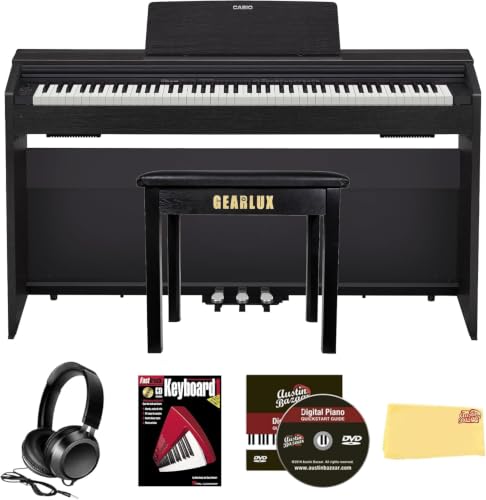
Digital pianos come in different form factors, from slim consoles to more traditional upright cabinets. The Casio Privia PX-870 has a sleek console design with a sliding key cover, making it compact and stylish for any room. The Yamaha Arius series offers a classic upright look with wood grain finishes and a three-pedal unit, complete with a matching bench. Consider your available space and aesthetic preferences. Both options are designed to fit seamlessly into a home environment, but the Yamaha’s traditional design may appeal to those wanting a more acoustic-looking instrument. Explore more options in our roundup of best console digital piano models.
Additional Features for Learning and Practice
Built-in learning tools can accelerate your progress. The Casio PX-870 includes Duet Mode for teacher-student play, dual headphone jacks, 60 built-in songs, a two-track MIDI recorder, and Concert Play with orchestral backing. The Yamaha Arius offers dual headphone jacks, 10 demo songs, and 10 piano preset songs. For serious practice, features like recording and layering are valuable. If you are a performer, you might also want to see our picks for the best stage piano models. These extras can make practice more engaging and efficient.
Final Thoughts
Choosing the best digital piano under $1000 comes down to your personal priorities: the Casio Privia PX-870 offers a powerful speaker system and advanced sound engine in a modern console design, while the Yamaha Arius series delivers a classic upright look with a trusted graded hammer action and a complete package including a bench. Both are exceptional instruments that will serve you well for years. We recommend the Casio Privia PX-870 to 88-Key Weighted Console for those who want immersive sound and modern features, and the Yamaha Arius Series 88-Key Weighted Action Upright for players who prefer a traditional design and a complete setup right out of the box.
Frequently Asked Questions
What is the best digital piano under $1000 for beginners in 2026?
For beginners, the Casio Privia PX-870 is an excellent choice due to its realistic weighted keys, built-in learning tools like Duet Mode and a two-track recorder, and immersive sound system. The Yamaha Arius series is also a strong option with its graded hammer action and easy-to-use interface. Both models provide the essential features for developing proper technique and enjoying practice sessions.
Are digital pianos under $1000 good for advanced players?
Yes, many digital pianos under $1000 offer features that satisfy intermediate to advanced players. Models like the Casio PX-870 and Yamaha Arius series provide weighted keys, high-quality sound engines with resonance effects, and connectivity options for recording or using music software. They are suitable for daily practice, home performance, and even some light gigging.
What is the difference between Casio Privia and Yamaha Arius digital pianos?
The main differences lie in key action and sound. Casio uses Tri-Sensor Scaled Hammer Action II with a slightly lighter feel, while Yamaha uses Graded Hammer Standard with a more traditional resistance. Casio’s AiR Sound Source emphasizes detailed resonance, while Yamaha focuses on a pure grand piano tone. The Casio PX-870 has a more modern console design with a powerful 40W speaker system, whereas the Yamaha Arius offers a classic upright look with a bench and three-pedal unit included.
Can I use headphones with these digital pianos?
Yes, both the Casio Privia PX-870 and Yamaha Arius series include dual headphone jacks, allowing you to practice quietly without disturbing others. This feature is especially useful for late-night practice or shared living spaces. The Casio model also includes a Headphone Mode that optimizes the sound for headphones.


